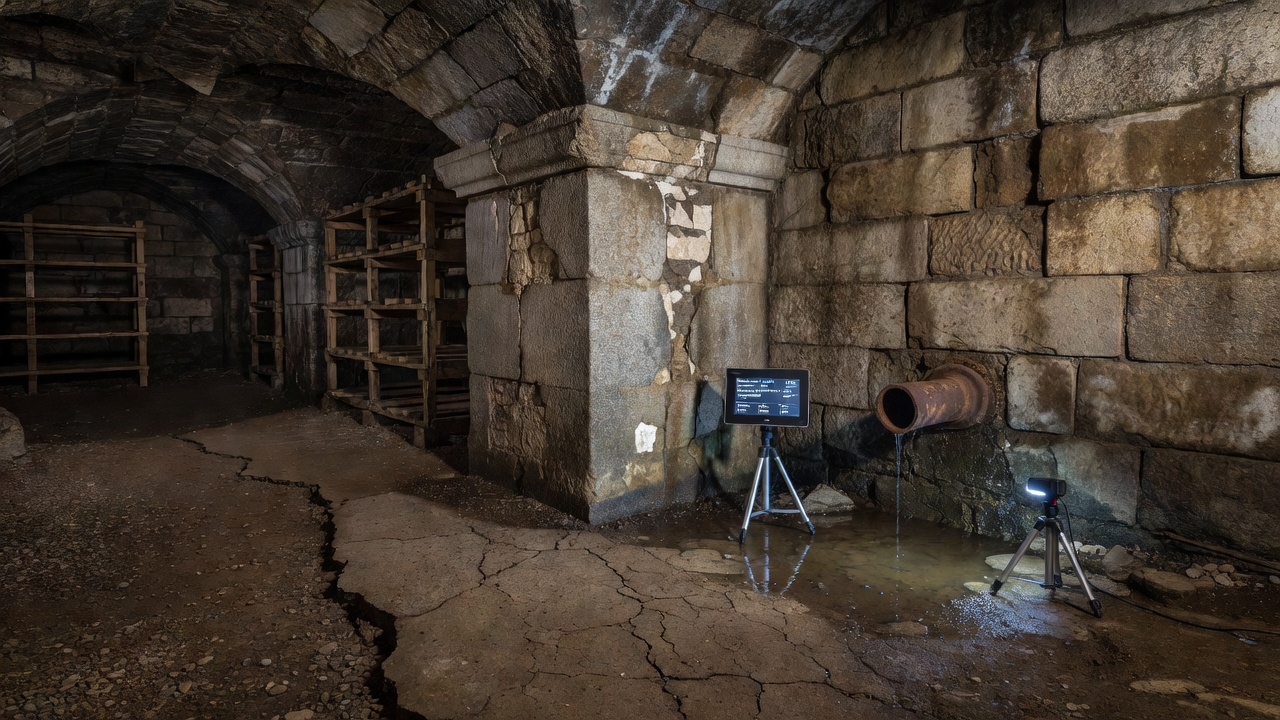
Mara Wolf · 26 September 2026
The Impact of Seasonal Groundwater Fluctuations on Foundation Stability in Historic Underground Storage Facilities
Historic underground storage facilities face ongoing pressure from seasonal shifts in groundwater levels, and researchers track these changes through continuous monitoring networks that record rises during wet periods alongside drops in drier months. Data from multiple regions shows how these cycles alter soil moisture content, which in turn influences the load-bearing capacity of foundations built centuries ago with stone, brick, or early concrete. Observers note that facilities constructed before modern waterproofing standards often lack barriers against water movement, leaving them exposed when aquifers recharge or drain according to rainfall patterns.
Seasonal Patterns in Groundwater Behavior
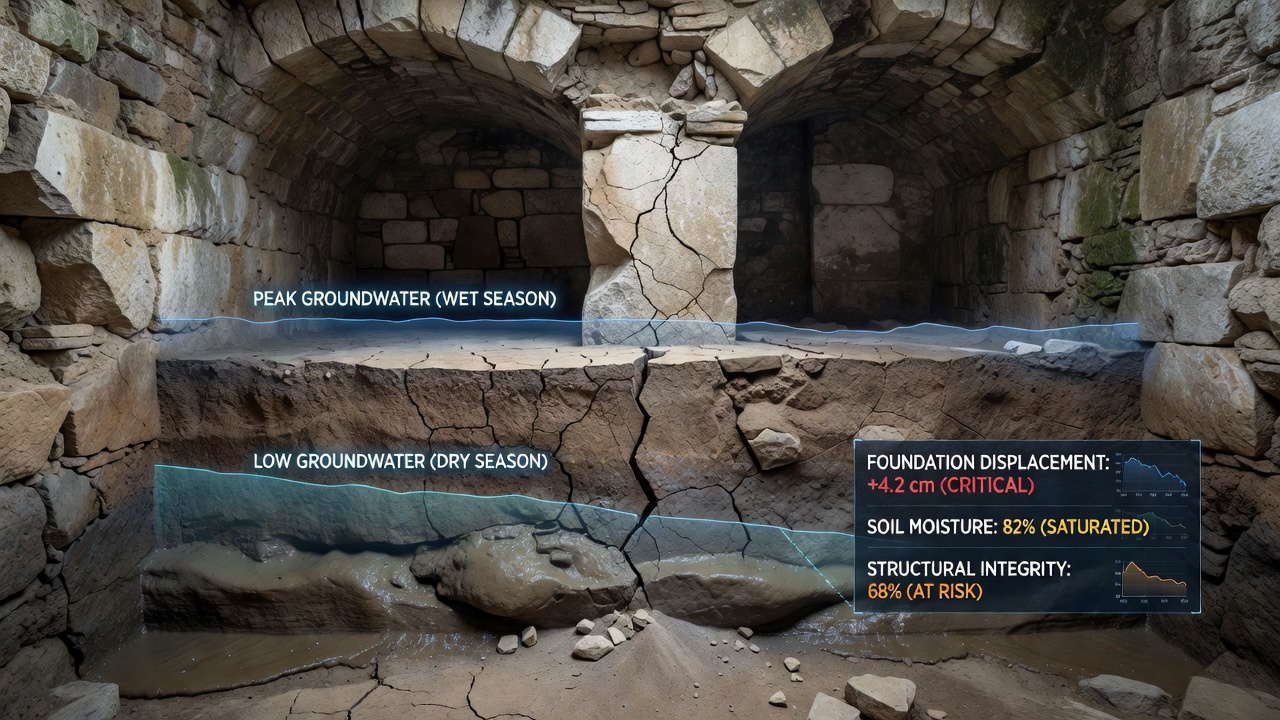
Groundwater tables typically peak in late winter and early spring after snowmelt and heavy precipitation, while they reach lower points by late summer and fall in many temperate zones. According to records maintained by the United States Geological Survey, annual fluctuations can range from several centimeters to more than a meter depending on local geology and climate. These variations affect the hydrostatic pressure exerted on buried walls and floors, and facilities located near rivers or in low-lying areas experience more pronounced effects during recharge events.
Those who study historic sites report that clay-rich soils expand when saturated and contract when dried, creating differential movement beneath rigid foundation elements. Sandier substrates drain more quickly yet offer less cohesive support once water recedes, allowing minor settlements to accumulate over repeated cycles. In September 2026, updated sensor arrays installed across several European heritage sites captured an unusually rapid drop in groundwater following an extended dry spell, highlighting how quickly conditions can shift within a single season.
Foundation Responses to Water Level Changes
Foundation stability depends on consistent soil support, yet fluctuating water tables disrupt that equilibrium through repeated wetting and drying. When groundwater rises, increased pore pressure reduces effective stress in the soil, which can lead to softening around footings and potential uplift on lighter structures. As levels fall, the loss of buoyancy combined with soil shrinkage pulls on walls and floors, and older masonry often develops cracks along mortar joints where movement concentrates.
Studies conducted by the Geological Survey of Canada document cases where historic cellars experienced progressive tilting after multiple years of above-average spring recharge followed by summer drawdown. Engineers examining these sites measure crack widths and alignment to determine whether movement remains within tolerable limits or requires intervention. Data indicates that facilities with original timber piles suffer additional stress when surrounding soil loses saturation, because pile friction decreases and loads transfer unevenly to remaining supports.
Monitoring Approaches and Data Collection
Modern assessments rely on piezometers, inclinometers, and automated leveling systems that transmit readings at regular intervals to central databases. Research institutions compile these measurements to model long-term trends and identify facilities at elevated risk during particular seasons. One project coordinated across multiple sites in the Netherlands demonstrated that combining groundwater data with structural strain gauges provides earlier warnings of movement than visual inspections alone.
Facilities managers schedule detailed surveys before and after expected high-water periods so that any new distress can be documented promptly. Satellite-based interferometry supplements ground sensors in some regions, offering wide-area views of surface deformation that may correlate with subsurface water changes. Figures released by the European Environment Agency show increasing coordination between heritage agencies and national geological services to standardize reporting formats and share findings across borders.
Mitigation Measures Applied at Historic Sites
Interventions focus on stabilizing soil moisture or reinforcing foundations without altering the historic character of the structures. Drainage improvements such as French drains or sump systems divert excess water during peak periods, while impermeable membranes installed along exterior walls reduce direct contact with fluctuating groundwater. In cases where settlement has already occurred, underpinning with micropiles transfers loads to deeper, more stable strata that remain below the lowest recorded water levels.
Engineers select materials and techniques compatible with original construction to avoid introducing new stress points. Regular maintenance of existing drainage channels prevents blockages that could amplify seasonal effects, and some sites incorporate adjustable supports that accommodate minor ongoing movement. Reports from Australian heritage authorities describe successful stabilization projects where monitoring continued for several years after work completion to verify performance across multiple groundwater cycles.
Conclusion
Seasonal groundwater fluctuations continue to shape the condition of historic underground storage facilities through their effects on soil behavior and foundation integrity. Ongoing data collection from government agencies and research organizations supplies the information needed to anticipate problems and apply targeted measures. Coordinated efforts across different countries demonstrate that systematic observation combined with appropriate engineering responses can extend the service life of these structures even as climate patterns evolve.